Luxury Apartments, Strong Returns & Global Connectivity Make Dwarka Expressway the NRI Hotspot
Tuesday - 26 May 2026

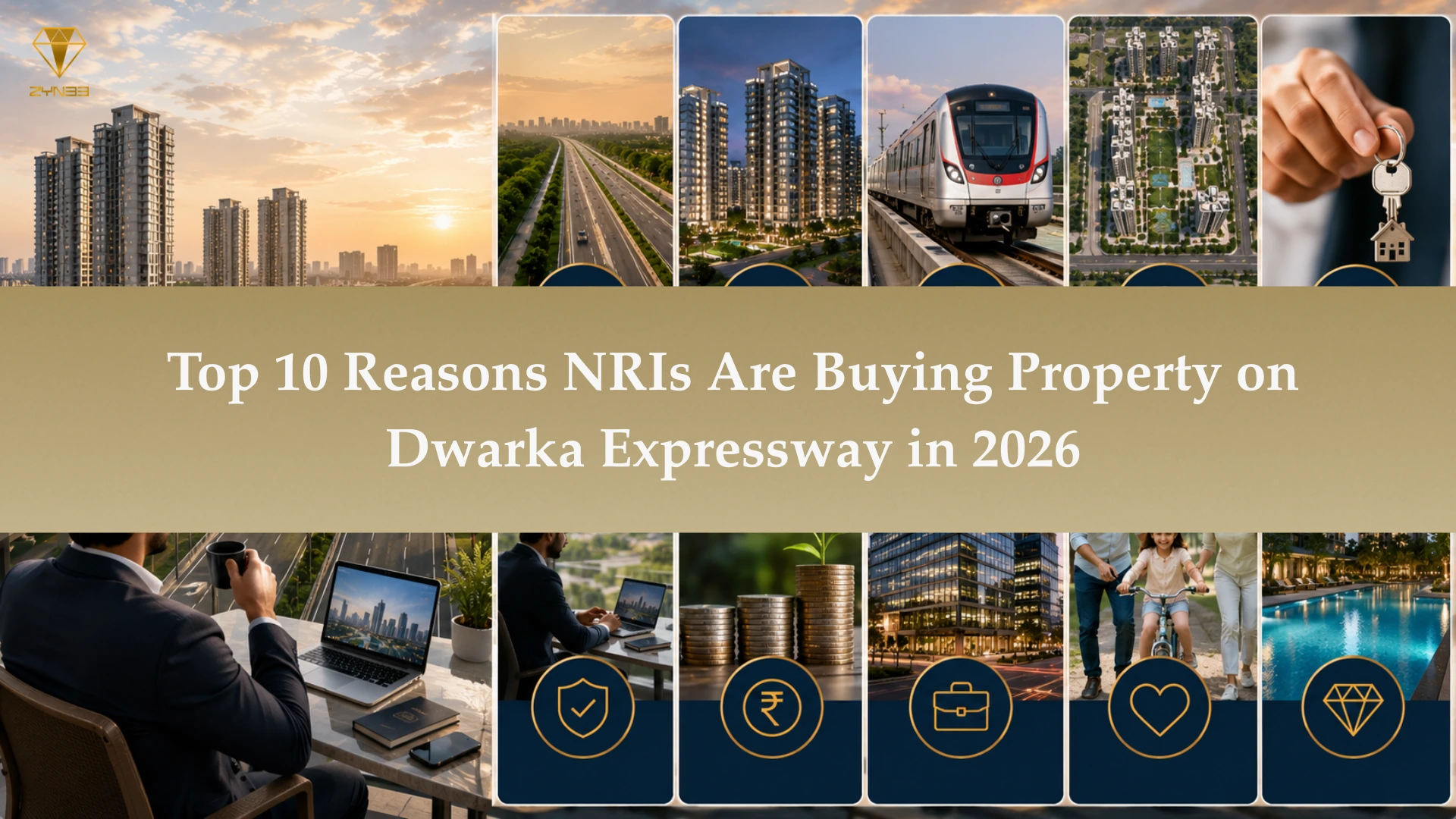
Top 10 Reasons NRIs Are Buying Property on Dwarka Expressway in 2026

Dwarka Expressway has emerged as a preferred destination for NRI real estate investment in 2026 due to its strong risk-adjusted returns, airport connectivity, branded residences, RERA-backed transparency, and improving resale liquidity. NRIs from the UAE, UK, US, and Singapore are investing for long-term capital appreciation, rental yield, and global-standard living rather than emotional ties. Premium sectors, tier-1 developers, and FEMA-compliant investment structures make the corridor a strategic choice for both lifestyle and wealth creation.

Most advisors selling property in dwarka expressway to NRIs frame the pitch around emotional ties to India. That framing misses the actual reason capital is moving. NRIs based in Dubai, Singapore, London, the US and the Gulf are not buying here out of nostalgia. They are buying because the corridor's risk-adjusted return profile in 2026 is structurally better than alternatives available to them in their home jurisdictions.

A Rs 4 Cr apartment on Dwarka Expressway is forecast to deliver 12 to 18 percent annual appreciation per Knight Frank, Anarock and CBRE projections, plus 2 to 4 percent rental yield. A comparable USD 500K apartment in Dubai's mid-tier zones currently runs at single-digit appreciation projections. Singapore residential is yield-led at sub-3 percent. London prime is in a multi-year cooling phase. The math, not the sentiment, is what brought NRI capital back to NCR in volume through 2024 and 2025. The questions NRIs ask now are sharper: which corridor, which sector, which developer, what is the exit logic.

Here are the ten specific reasons NRI capital is concentrating on this corridor in 2026.

60-Second Decision Filter for NRIs

Your Situation

What to Do

Rs 3 Cr to Rs 6 Cr, want airport-proximate primary home for India visits

Sector 103, 104, 109 ready or near-possession premium core

Rs 6 Cr to Rs 12 Cr, want branded residence with hotel-grade services

Westin Residences Sector 103, M3M Crown, Sobha Aranya

Rs 2 Cr to Rs 3.5 Cr, pure yield plus capital appreciation

Mid-value belt (Sector 102, 106, 108) with tier-1 developer

No NRE or NRO account established, never invested in Indian property

Establish banking infrastructure first, then evaluate inventory

Plan to return to India in 24 months, need ready possession

Ready or 80 percent complete inventory only, avoid early-stage launches

If this is not you, stop here.

Market Reality: Where NRI Capital Is Actually Flowing

NRI buyer share of Dwarka Expressway transactions has risen materially through 2024 and 2025. Branded residences from Westin, M3M Elie Saab, and the Krisumi cluster have reported NRI participation at 30 to 45 percent of bookings in initial launch phases. Premium ticket sizes between Rs 4 Cr and Rs 8 Cr are the dominant NRI zone. Ultra-luxury above Rs 10 Cr sees concentrated participation from US and UK-based NRIs with longer hold appetites.

The corridor's current pricing supports this. Premium residential pricing across NCR's leading corridors sits between Rs 12,000 and Rs 35,000 per sq ft per M3M Premium and Sobha tracking. Rental yields run 3.5 to 5.2 percent across Golf Course Road, Sohna Road and Dwarka Expressway corridors. Capital appreciation in the luxury segment (Rs 4 Cr plus tickets) ran at 18 to 25 percent annually between 2023 and 2025. The forward case remains compelling at 12 to 18 percent annual through 2028 even after that surge.

Tenant quality is the structural backbone of the NRI thesis. CXOs, expats, MNC employees and senior corporate professionals form the dominant tenant pool. That tenant profile ensures consistent, high-quality occupancy and predictable lease cycles. For NRIs operating their Indian asset from 7,000 km away, predictability matters as much as appreciation.

Cycle Positioning: Why 2026 Is the Specific Year

The corridor's cycle stage in 2026 produces a specific window for NRI investment Dwarka Expressway capital. Infrastructure is operational rather than promised. The Q4 2024 to Q1 2025 surge has cooled. Forward appreciation projects in the structural 12 to 18 percent range rather than speculative spikes. Tier-1 developer inventory is broadly available across price bands.

NRI capital is structurally cautious. The 2020 to 2023 phase felt too speculative for many NRI buyers who watched the surge from abroad. The current phase is more legible. Infrastructure visible, prices documented, rental benchmarks established, developer track records clear. That legibility is what makes 2026 the year a wider NRI buyer base is actively entering rather than waiting.

The metro Blue Line extension confirmed for the 2026 to 2027 window adds a second timing argument. Buying ahead of metro operationalisation captures the projected 15 to 20 percent appreciation uplift that historically follows confirmed metro alignments on Gurgaon corridors. Cycle Positioning here is exactly what NRI capital looks for: a structural catalyst with documented historical precedent.

The 10 Reasons NRIs Are Concentrating Capital Here

Reason 1: Airport proximity at world-class standard.

IGI Airport sits 15 to 20 minutes from key Dwarka Expressway sectors via direct expressway access. For NRIs who travel between India and their base country 4 to 8 times annually, that proximity translates into hundreds of saved hours over a decade. Properties near airports in global cities like London, Singapore and Dubai command consistent premiums. NRIs understand this premium because they have paid it abroad. The Dwarka Expressway equivalent is currently underpriced relative to global airport-proximate benchmarks.

Reason 2: FEMA compliant entry with zero complexity.

NRIs can buy residential and commercial property in India under FEMA without separate RBI approval. Payments must flow through NRE, NRO or FCNR accounts. That is the complete compliance framework for the residential segment. Agricultural land, plantation property and farmhouses are excluded. FEMA compliant property India entry is operationally simpler than NRIs encounter in many other jurisdictions. Repatriation of principal, rental income, and capital gains is permitted within structured limits.

Reason 3: Repatriation framework that actually works.

NRIs can repatriate up to USD 1 million per financial year from their NRO account, which includes property sale proceeds. If the property was originally purchased with NRE funds or foreign remittances, the principal amount can be repatriated without this limit. Form 15CA and Form 15CB from a Chartered Accountant are required before any repatriation. The framework is documented, predictable, and well-tested by the volume of NRI capital that has already moved both ways over the past decade.

Reason 4: Branded residences arrive at scale.

Westin Residences in Sector 103 (Whiteland and Marriott partnership), M3M Elie Saab Residences, Krisumi Waterside Residences (Sumitomo and Krishna Group), and M3M Mansion brought global hospitality branding to the corridor between 2023 and 2026. For NRIs who value the standardised quality, concierge services and brand recognition they experience in Dubai, Singapore and London, branded residences on Dwarka Expressway deliver the same product category at materially lower absolute pricing. Westin Residences pricing of Rs 4.68 Cr to Rs 6.15 Cr compares favourably against equivalent branded residences in Dubai trading at USD 1.5 million and above.

Reason 5: NRI-friendly developer ecosystem.

DLF, M3M, Sobha, Godrej, Central Park, Whiteland and Signature Global all maintain dedicated NRI desks with documentation support, virtual site visits, and transaction handholding for buyers operating from abroad. The corridor's tier-1 developer presence is among the strongest in any Gurgaon micro-market. M3M Crown, M3M Capital, M3M Mansion, M3M Elie Saab Residences and M3M Antalya Hills sit alongside Sobha City Gurgaon, Sobha Altus, Sobha Aranya, Godrej Vrikshya, Godrej Meridien, Signature Global City 37D and Signature Global Twin Tower DXP. Diligence capacity matches NRI buyer needs.

Reason 6: RERA framework gives genuine buyer protection.

Haryana RERA is among India's most active state regulators. RERA registration is mandatory, project funds are escrow-managed, and possession deadlines carry penalty implications for non-delivery. For NRIs who cannot visit a project monthly to verify construction progress, RERA's compliance framework is the structural protection that makes remote ownership viable. RERA-registered projects on the corridor are easy to verify online before booking.

Reason 7: Lock-and-leave operational viability.

Branded residences and tier-1 township projects on Dwarka Expressway operate at hotel-grade service standards. Concierge desks, professional housekeeping, 24x7 security, maintenance management, and tenant management are operationally integrated. NRIs can leave the property dormant during work cycles abroad or lease it actively through managed-rental arrangements offered by several developer partners. The lock-and-leave model functions practically here in a way that older Gurgaon clusters do not deliver.

Reason 8: Direct comparison advantage versus other NCR corridors.

Golf Course Road luxury currently trades at Rs 25,000 to Rs 45,000 per sq ft for comparable inventory. Dwarka Expressway premium core trades at Rs 18,000 to Rs 22,000 per sq ft. Delhi border luxury at Rs 20,000 to Rs 26,000 per sq ft. The arbitrage between Golf Course Road and Dwarka Expressway luxury represents a Rs 5,000 to Rs 8,000 per sq ft pricing delta on similar quality inventory. For NRIs deploying USD 500K to USD 1.5 million, that delta represents materially larger inventory and configuration access at the same dollar deployment.

Reason 9: Rental yields support holding economics during international postings.

Yields on Dwarka Expressway run between 2 percent (ultra-luxury branded) and 4 to 5 percent (mid-value belt and affordable cluster). Commercial assets along the corridor deliver 6 to 7 percent with longer lease tenures. For NRIs combining residential and commercial allocation, the corridor offers a complete yield ladder. SCO and high-street retail inventory along Sector 88A and adjacent sectors yields 7 to 11 percent on developed value with FEMA-compliant repatriation across principal, rental income and capital gains.

Reason 10: Exit liquidity is structurally improving.

The corridor's resale market has matured through 2024 and 2025. Tier-1 developer projects in operational sectors carry secondary market liquidity that older Gurgaon clusters took 10 years to build. For NRIs whose hold period might be cut short by professional moves, family decisions, or relocation back to India, having a functioning exit market matters more than peak appreciation. Dwarka Expressway in 2026 offers both.

Segment Breakdown: Where NRI Capital Concentrates

Premium Core (Sectors 103, 104, 109)

Entry Price: Rs 15,500 to Rs 22,000 per sq ft. Rental Yield: 3 to 3.5 percent. Capital Appreciation: 8 to 10 percent annual. Sobha Altus, Godrej Vrikshya, Central Park 104 and Hero Homes The Palatial anchor this band. The premium core is the largest single zone of NRI capital deployment because it combines airport proximity, established social infrastructure, ready inventory availability, and tier-1 developer presence. NRIs buying for use during India visits or for elderly parents typically anchor in this band.

Branded Residences (Sector 103, 36A, 113)

Entry Price: Rs 22,000 to Rs 30,000 per sq ft. Rental Yield: 2 to 3 percent. Capital Appreciation: 12 to 15 percent annual on disciplined entry. Westin Residences (Whiteland and Marriott), Krisumi Waterside Residences and Krisumi Forest Reserve (Sumitomo and Krishna Group), M3M Mansion and similar branded inventory. Branded residence buyers carry the longest NRI hold periods, typically 8 to 12 years. The structural argument is brand recognition that supports both rental yields and secondary market liquidity for international buyers.

Delhi Border Luxury (Sectors 111, 113, 114)

Entry Price: Rs 15,000 to Rs 26,000 per sq ft. Rental Yield: 2.5 to 3.5 percent. Capital Appreciation: 25 to 35 percent over 4 years on spread compression to Golf Course Road. M3M Crown, M3M Capital, M3M Mansion, M3M Elie Saab Residences, M3M Antalya Hills and Sobha Aranya anchor this band. NRIs based in the UK and US who value Delhi proximity for family connections typically concentrate here.

Mid-Value Belt (Sectors 102, 106, 108)

Entry Price: Rs 11,000 to Rs 17,000 per sq ft. Rental Yield: 3.5 to 4.5 percent. Capital Appreciation: 12 to 15 percent over 24 to 36 months. Godrej Meridien and Sobha City Gurgaon dominate this band. NRIs prioritising yield plus capital growth as a portfolio asset rather than personal use concentrate here. The mid-value belt offers the corridor's best risk-adjusted returns for capital that does not need lifestyle premium features.

Affordable Cluster with Yield Profile (Sectors 37D, 88A, 99A)

Entry Price: Rs 8,000 to Rs 13,000 per sq ft. Rental Yield: 4 to 5 percent residential, 7 to 11 percent commercial SCO. Capital Appreciation: 12 to 18 percent annual on residential, 18 to 35 percent in commercial high-conviction phases. Lotus Homz, ROF Alante, Hero Homes Gurgaon, Signature Global The Millennia, Pareena Laxmi Apartments and Pivotal Riddhi Siddhi Apartments offer residential entries. SCO plots in Sector 88A with direct Dwarka Expressway frontage offer the strongest yield-plus-appreciation combination on the corridor for NRI commercial allocation.

Scenario Modeling: What NRI Capital Actually Returns

Scenario 1: USD 500K (Rs 4.2 Cr) in Sector 103 premium core branded residence, 7 year hold. Entry at Rs 21,000 per sq ft for a 2,000 sq ft 3 BHK in tier-1 inventory. Projected appreciation at 10 to 12 percent annually produces an exit value of Rs 8 Cr to Rs 9 Cr. Rental income post-possession of Rs 90,000 to Rs 1.1 L per month. Net INR IRR range: 12 to 14 percent. After FX consideration on repatriation, USD IRR range: 10 to 13 percent.

Scenario 2: USD 800K (Rs 6.7 Cr) in Westin Residences or M3M Elie Saab branded luxury, 8 year hold. Entry at Rs 24,000 per sq ft for a 2,800 sq ft 4 BHK. Projected appreciation at 12 to 14 percent annually produces an exit value of Rs 13 Cr to Rs 15 Cr. Rental income of Rs 1.6 L to Rs 2.0 L per month. Net INR IRR range: 13 to 16 percent. The branded premium typically holds resale liquidity better in NRI exit scenarios.

Scenario 3: USD 300K (Rs 2.5 Cr) in Sector 88A SCO commercial plot, 6 year hold. 100 sq yd plot with G+3 floor potential. Monthly rent potential Rs 1.1 L to Rs 2.25 L. Annual net yield 7 to 11 percent on developed value. Capital appreciation projected at 18 to 35 percent annually in high-conviction phases. Net INR IRR range: 18 to 25 percent. The commercial SCO play carries the highest IRR but requires the most active asset management.

Decision Snapshot for NRI Buyers

NRI Profile

Budget

Hold Period

Action

UAE / Gulf-based, frequent India visits

Rs 3 Cr to Rs 6 Cr

5 to 7 years

Premium core Sector 103, 104, 109 ready possession

US / UK-based, longer hold appetite

Rs 6 Cr to Rs 12 Cr

8 to 10 years

Westin Residences, M3M ultra-luxury, Krisumi Forest Reserve

Singapore / SE Asia-based, yield-led

Rs 2 Cr to Rs 4 Cr

5 to 7 years

Mid-value belt Sector 102, 106, 108 tier-1 inventory

Returning NRI within 24 months

Rs 4 Cr to Rs 8 Cr

Self-use, 10 year horizon

Ready possession premium core or branded for end use

Commercial allocation

Rs 2 Cr to Rs 4 Cr

5 to 7 years

Sector 88A SCO with Dwarka Expressway frontage

Who Should Avoid This Corridor in 2026

NRIs without an established NRE or NRO banking infrastructure should not enter property transactions before that infrastructure is operational. Setting up banking from abroad typically takes 4 to 8 weeks. Booking property without that banking ready creates documentation friction and FEMA compliance risk.

NRIs expecting to flip within 18 to 24 months should not enter. Stamp duty, registration, broker fees and capital gains tax routinely eat 9 to 13 percent of gross transaction value. Forced short exits face thinner secondary market liquidity than longer holds. Cross-border FX timing risk adds another layer of return uncertainty for NRI buyers specifically.

NRIs with maximum leverage from foreign bank loans should recalibrate. Indian rental income may not satisfy interest service obligations on foreign loans during the 6 to 9 month lease-up period after possession. The cash flow gap creates pressure at the wrong moment in the construction or possession cycle.

NRIs who cannot designate a power of attorney or trusted family member for project visits, possession handover, and tenant management should focus on branded residences or developer-managed inventory where these services are integrated. Standalone projects without managed-rental options are operationally harder to run from abroad.

What Matters vs What Is Noise

What Matters for NRIs

What Is Noise

RERA-verified developer with documented delivery track record

Brand recognition from a different state or city

Repatriation history for the specific developer (other NRI exits processed)

Generic "NRI-friendly" marketing language

Managed-rental or hospitality service availability

Amenity lists without operational service partner

USD-INR FX hedging strategy for exit window

INR-only return projections without FX consideration

Form 15CA and 15CB process clarity with CA partner

Verbal repatriation assurances from sales teams

Tenant profile clarity (CXO, expat, MNC employee)

Generic rental yield projections without tenant pool data

Timing Triggers NRIs Should Track Through 2026 to 2028

Four catalysts will drive forward returns on NRI property Gurgaon investments through the next 24 to 36 months.

Metro Blue Line extension. The Dwarka Sector 21 to Kherki Daula extension is confirmed for the 2026 to 2027 operational window. Sectors 102, 103, 104 and 109 are projected to see 15 to 20 percent appreciation on metro operationalisation. This is the most important single trigger for NRI capital entering in 2026.

Diplomatic Enclave activation. The proposed Diplomatic Enclave near Dwarka Sector 24 is a long-cycle catalyst that benefits branded residences first. As foreign mission relocations begin, premium rental demand from diplomatic staff strengthens structurally. NRIs in branded residence inventory benefit directly.

Yashobhoomi Convention Centre maturity. Rising event calendar drives hospitality demand which supports short-stay luxury rentals and branded residence absorption. NRIs operating their property as managed rentals capture both long-stay and short-stay demand cycles.

Circle rate revision for 2026 to 2027. Gurgaon's April 2026 circle rate revision raised official rates by up to 75 percent across the city. Higher circle rates mean higher stamp duty for future buyers. NRIs entering in 2026 capture the effective discount versus 2027 entry on identical inventory.

Entry Strategy: NRI-Specific Discipline

For premium core entries (Sectors 103, 104, 109): Ready or 80 percent complete inventory below Rs 21,000 per sq ft. Tier-1 developers only. Sobha Altus, Godrej Vrikshya, Central Park 104 and Hero Homes The Palatial fit. For NRIs unable to visit pre-booking, virtual walkthrough plus third-party project inspection is essential. The cost of an independent inspection (Rs 25,000 to Rs 50,000) is trivial relative to the transaction value.

For branded residence entries: The developer plus operator combination is the primary filter. Whiteland Westin (Marriott), Krisumi (Sumitomo and Krishna Group), M3M Elie Saab Residences carry resale liquidity that lesser branded inventory does not. Target configurations between 2,500 and 3,200 sq ft for optimal tenant pool depth.

For mid-value belt entries: Tier-1 developer inventory below Rs 14,500 per sq ft, 30 to 70 percent complete. Godrej Meridien, Sobha City Gurgaon are the cleanest entries. NRIs entering this band typically pair the residential allocation with an active rental management arrangement to capture the yield component.

For SCO commercial entries: Sector 88A SCO plots with direct Dwarka Expressway frontage. 100 to 129 sq yd plot sizes with G+3 floor development potential. Funds routed through NRE or NRO accounts ensure full repatriation rights. Ground floor retail rents at Rs 120 to Rs 250 per sq ft per month; upper floor offices at Rs 60 to Rs 120 per sq ft per month. The asset class requires more active management than residential but delivers the highest yield on the corridor.

Risk: NRI-Specific, Not Generic

The primary risk for NRI buyers is FX timing on exit. INR depreciation against major currencies (USD, GBP, AED) can erode dollar-denominated IRR even when INR returns are strong. NRIs entering in 2026 should consider FX hedging strategy at the exit window rather than treating the transaction as INR-pure. A 20 percent INR depreciation over a 7-year hold can compress a 14 percent INR IRR to roughly 11 percent in USD terms.

The secondary risk is documentation gaps. NRIs operating from abroad typically encounter delays in title verification, RERA documentation review, and developer-side paperwork. Build a 30 to 60 day buffer into the booking-to-registration timeline. Engage a Chartered Accountant familiar with NRI transactions before booking, not at registration.

The tertiary risk is tenant management distance. NRIs without a local family contact or professional property manager face higher tenant turnover costs, lease gap risks, and maintenance escalation. Branded residences and developer-managed inventory mitigate this materially. For standalone projects, engaging a professional property manager (typically 4 to 8 percent of annual rent) is essential.

The quaternary risk is tax inefficiency. NRIs must file ITR in India for rental income above the threshold. TDS at 30 percent applies to NRI rental income at source unless reduced by tax treaty. Long-term capital gains tax (20 percent with indexation, 12.5 percent without) applies on resale. Tax planning at booking, not at exit, makes the difference between 14 percent net IRR and 11 percent net IRR.

Exit Logic: How NRIs Should Plan the Exit

Price-based exit. Premium core entries at Rs 18,000 to Rs 22,000 per sq ft target exit at Rs 28,000 to Rs 32,000 per sq ft over 6 to 7 years. Branded residence entries at Rs 24,000 to Rs 30,000 per sq ft target exit at Rs 38,000 to Rs 50,000 per sq ft over 7 to 8 years.

Event-based exit. Metro operationalisation in the 2026 to 2028 window creates 2 to 3 quarters of heightened secondary market liquidity. NRIs whose hold period coincides with this window should position exits inside it. Diplomatic Enclave activation provides a secondary trigger for Sector 103 branded inventory specifically.

FX-based exit. NRIs should track the USD-INR or GBP-INR trajectory during the planned exit window. Repatriating during INR strength periods materially improves USD or GBP-denominated returns. A 6-month flexible window on the targeted exit year allows capture of better FX timing.

Time-based exit. For under-construction entries, target exit at possession plus 24 to 36 months. The project matures into a recognised address, rental benchmarks are documented, and resale liquidity strengthens versus possession itself. Forced exits at possession give up material upside.

Final Decision

NRI capital has concentrated on property in dwarka expressway in 2026 for ten specific structural reasons rather than emotional ones. Airport proximity. FEMA-compliant entry. Repatriation framework that works. Branded residence depth. Tier-1 developer ecosystem. RERA protection. Lock-and-leave operational viability. Direct comparison advantage versus Golf Course Road. Yield support for holding economics. Improving exit liquidity. Each reason carries documented evidence and quantifiable impact.

For NRIs based in the UAE and Gulf with frequent India visits, premium core inventory (Sectors 103, 104, 109) offers the cleanest entry. For US and UK-based NRIs with longer hold appetite, branded residences (Westin, M3M Elie Saab, Krisumi, M3M Mansion) deliver the deepest brand provenance and resale liquidity. For Singapore and Southeast Asia-based NRIs with yield-led strategies, the mid-value belt offers the strongest risk-adjusted returns. For commercial allocation, Sector 88A SCO inventory delivers the highest IRR on the corridor.

The discipline that wins for NRI capital: developer first, sector second, configuration third, price fourth. Reverse that order and the math stops working regardless of how attractive the surface narrative looks. The corridor is past the discovery phase. It is now an institutional-grade investment market with NRI capital arriving in volume because the structural case finally meets the operational reality.

Next Step

If you are an NRI with capital between Rs 2 Cr and Rs 12 Cr (USD 250K to USD 1.4 million) and a decision window of the next 60 to 90 days, ZYN33 maps live inventory, FEMA-compliant transaction flow, developer track records and repatriation guidance across Dwarka Expressway NRI buyers opportunities. Strata Capital Holdings tracks the underlying data and trigger calendar; ZYN33 converts informed intent into transactions. Our NRI engagement model handles documentation, third-party project inspection, banking infrastructure setup support and rental management arrangements end-to-end.


FAQ

Yes. NRIs can buy residential and commercial property in India under FEMA without separate RBI approval. Payments must flow through NRE, NRO or FCNR banking channels. Agricultural land, plantation property and farmhouses are excluded from NRI purchase rights. The corridor's tier-1 developers (DLF, M3M, Sobha, Godrej, Whiteland, Signature Global) maintain dedicated NRI desks and standard documentation processes that handle the transaction end-to-end.

Recent Blog Posts

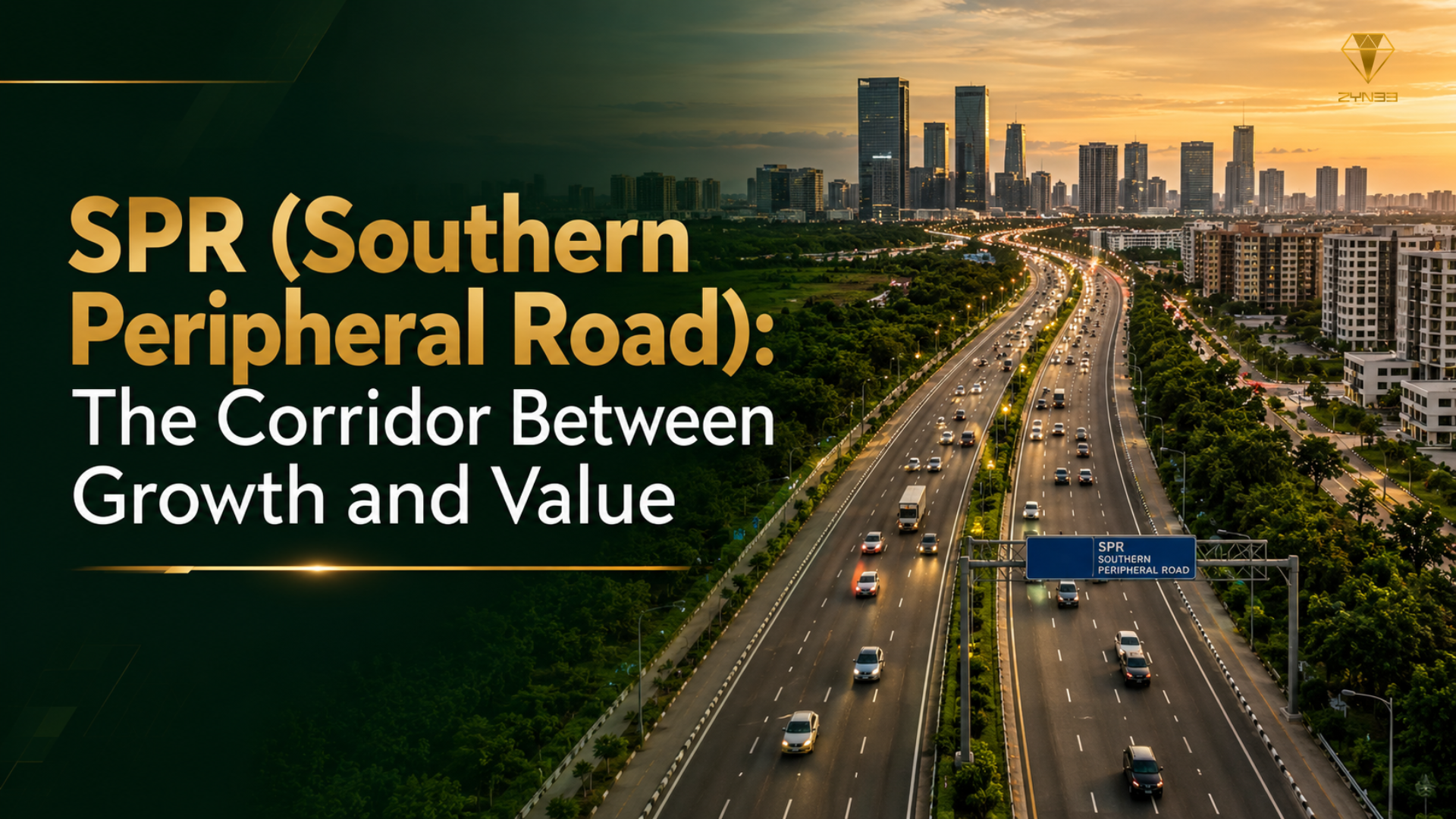
Dwarka Expressway vs SPR Gurgaon: Which Corridor Wins on Capital Appreciation?
Dwarka Expressway luxury apartments dwarka expressway residential projects property in dwarka expressway

Dwarka Expressway vs SPR Gurgaon: Which Corridor Wins on Capital Appreciation?

Dwarka Expressway and SPR Gurgaon are both positioned for strong real estate growth in 2026, but they suit different investor profiles. Dwarka Expressway offers airport connectivity, luxury inventory, and post-trigger stability, while SPR provides stronger pre-trigger appreciation potential, rental demand, and Golf Course Road access. Both corridors can deliver 12–18% annual returns over the next 5–6 years. The right choice depends on budget, hold period, lifestyle priorities, and risk appetite rather than headline appreciation numbers alone.

View More
Flats in Dwarka Expressway Gurgaon: Sector Wise Price Comparison
3 bhk flats in dwarka expressway 2 bhk flats in dwarka expressway dwarka expressway residential projects

Flats in Dwarka Expressway Gurgaon: Sector Wise Price Comparison

Dwarka Expressway Gurgaon is not one single market. Every sector operates in a different price cycle, supply stage, and return profile. Affordable clusters like Sector 37D, 88A, and 99A offer higher upside with longer holding periods, while Sectors 102, 106, and 108 provide balanced appreciation and rental yield. Premium sectors 103, 104, and 109 suit stable end-use buyers, whereas Sectors 111 to 114 target luxury investors seeking branded residences and long-term capital growth. The right investment depends on budget, holding period, and sector positioning—not just project pricing.

View More
3 BHK in Dwarka Expressway: Pricing, Layouts and Top Projects for 2026
luxury apartments in gurgaon 3 bhk flats in dwarka expressway 3 bhk in dwarka expressway

3 BHK in Dwarka Expressway: Pricing, Layouts and Top Projects for 2026

Dwarka Expressway 3 BHK market in 2026 offers options from affordable to luxury segments across key sectors like 103, 104, 106 and 108. This guide explains pricing, layouts, rental yield, appreciation potential and top projects for different budgets. Buyers should focus on sector growth cycle, developer track record and layout efficiency before selecting a property. Mid-value and premium sectors continue to show strong long-term investment potential with metro-driven growth ahead.

View More
Dwarka Expressway Luxury Apartments: Where Premium Living Meets Premium Returns
luxury apartments in gurgaon Dwarka Expressway luxury apartments luxury homes Gurgaon

Dwarka Expressway Luxury Apartments: Where Premium Living Meets Premium Returns

Dwarka Expressway has become one of the fastest-growing luxury real estate destinations in Gurgaon. Premium apartments in this location offer modern amenities, excellent connectivity, and strong investment potential. With rising infrastructure development, proximity to business hubs, and increasing demand for upscale living, luxury properties here attract both homebuyers and investors. From spacious layouts to high-end lifestyle features, Dwarka Expressway delivers the perfect mix of comfort, convenience, and long-term returns.

View More

Related Insights

Invest in Sector 36 & 37D for Long-term Gains

Invest in Sector 36 & 37D for Long-term Gains

Looking for affordable homes in Gurgaon without moving too far from the city? Sector 36 Sohna and Sector 37D are among the few locations that still offer quality homes under ₹50 lakh. With good connectivity, growing infrastructure and trusted residential projects, these sectors have become popular choices for first-time buyers and families in 2025.

View More
Gurgaon Sectors 70 & 81: Value Homes Guide

Gurgaon Sectors 70 & 81: Value Homes Guide

Looking for affordable homes in Gurgaon? Sector 70 and Sector 81 offer value driven housing under ₹50 lakh with good connectivity, planned development and steady long term growth.

View More
Sector 84 Gurgaon: Budget Location for Homebuyers

Sector 84 Gurgaon: Budget Location for Homebuyers

Sector 84 Gurgaon is quickly becoming a top choice for budget homebuyers and NRI investors. The area offers the perfect mix of lifestyle and long-term returns. Here’s why this fast-growing location deserves your attention.

View More
Sector 81 Gurgaon: The Smart Choice for Budget Buyers

Sector 81 Gurgaon: The Smart Choice for Budget Buyers

Sector 81 Gurgaon is fast emerging as a smart choice for budget buyers and long-term investors. It offers a rare mix of affordability and future potential in today’s Gurgaon real estate market.

View More
Sector 92 Gurgaon: Plots under Affordable Price

Sector 92 Gurgaon: Plots under Affordable Price

Sector 92 offers affordable entry prices today with strong growth potential tomorrow. Discover why investing in plots here can deliver better flexibility, lower risk, and higher returns.

View More