Yield does not follow price in Gurugram, and getting that backwards is the most expensive mistake a first time investor makes. The cheapest corridor pays about 2 percent and the dearest pays 2 to 3.6. The best yield in the city sits on the second most expensive corridor, and the worst sits on a mid priced one. This maps every corridor to what your budget actually buys, what it pays while you hold it, and which ones a first purchase should avoid.
Written by Mansi Joshi, Marketing Intelligence Lead, ZYN33 Investment Desk. Reviewed by Ritesh Arora, Founder, ZYN33 and Strata Capital Holdings, Gurugram. Advising on Gurugram residential capital allocation since 2023, with mandates ranging from Rs 3 Cr to Rs 50 Cr. Published 14 November 2025. Last reviewed 7 September 2026.
Disclosure: ZYN33 distributes residential projects in Gurugram and is paid a transaction fee when a purchase completes, including on projects we discuss with you. We do not give tax advice. This post is general information. Take it to your chartered accountant.
Yield does not follow price here. Gurugram's cheapest corridor pays about 2 percent gross and its most expensive pays 2 to 3.6. The best yield in the city sits on the second most expensive corridor.
Getting that relationship backwards is the most expensive mistake a first purchase can make. It sends budget-constrained capital into cheap sectors expecting income that is not there. The best sectors for first time property investors are chosen by matching a budget to what it buys and what it pays while held. Not by finding the lowest rate. Every figure below is an asking price on super built up area from portal listing data. Yields are portal reported estimates rather than measured lease data.
Between 1 and 4.7 percent gross, and the ordering has almost nothing to do with price.
|
Corridor |
Asking rate, per sq ft, super area |
Portal reported gross yield |
Asking movement, 12 months |
|
Golf Course Road |
Rs 27,350 average |
2 to 3.6 percent |
Below the 2024 peak |
|
Golf Course Extension |
about Rs 18,887 |
3 to 4.7 percent |
minus 3.3 to plus 20.3 by sector |
|
Sector 106 |
about Rs 15,800 |
1 to 3 percent |
plus 1.0 to plus 13.3, source dependent |
|
Sohna Road, Gurugram |
Rs 15,550 average |
about 3 percent |
minus 0.3 percent |
|
Dwarka Expressway |
about Rs 14,000 |
about 2 percent |
minus 1.2 to plus 9 by sector |
|
SPR |
Rs 12,750 to Rs 18,350 |
about 1 percent |
minus 8.6 to plus 1.2 by sector |
|
New Gurgaon |
about Rs 10,950 |
about 2 percent |
plus 4.8 on flats |
|
Sohna town |
about Rs 9,800 |
about 2 percent |
plus 4.3 on flats |
Read that column against the one beside it. The rental yield by corridor ordering puts Golf Course Extension first at 3 to 4.7 percent. That is the second most expensive corridor in the city. SPR sits last at about 1 percent, and it is mid priced. Sohna town is the cheapest and pays the same as Dwarka Expressway.
So the common advice that premium areas yield more because demand is stronger is inverted. In premium corridors capital values have outrun rents, which compresses yield. And the common opposite advice, that cheaper sectors yield more, does not hold either.
Between 274 and 2,041 sq ft depending on corridor, which is a difference of more than seven times at the same money.
|
Corridor |
Rs 75 L buys |
Rs 1 Cr buys |
Rs 1.5 Cr buys |
Rs 2 Cr buys |
|
Sohna town |
765 sq ft |
1,020 sq ft |
1,531 sq ft |
2,041 sq ft |
|
New Gurgaon |
685 sq ft |
913 sq ft |
1,370 sq ft |
1,826 sq ft |
|
Dwarka Expressway |
536 sq ft |
714 sq ft |
1,071 sq ft |
1,429 sq ft |
|
Sohna Road |
482 sq ft |
643 sq ft |
965 sq ft |
1,286 sq ft |
|
Golf Course Extension |
397 sq ft |
529 sq ft |
794 sq ft |
1,059 sq ft |
|
Golf Course Road |
274 sq ft |
366 sq ft |
548 sq ft |
731 sq ft |
One correction that table makes to common guidance. Rs 1.5 crore is often given as the entry budget for Golf Course Extension. At Rs 18,887 per sq ft that buys 794 sq ft of super area, or about 477 sq ft carpet at typical efficiency. A premium three bedroom on that corridor is well above it. So Rs 1.5 crore is a studio or compact two bedroom budget there, not a three bedroom one.
The first time investor Gurgaon budget question is therefore not which sector is best. It is which sector your budget reaches at a usable size. For most first purchases that means New Gurgaon, Sohna town or Dwarka Expressway.
Match the budget to size first and yield second. Four situations sort it.
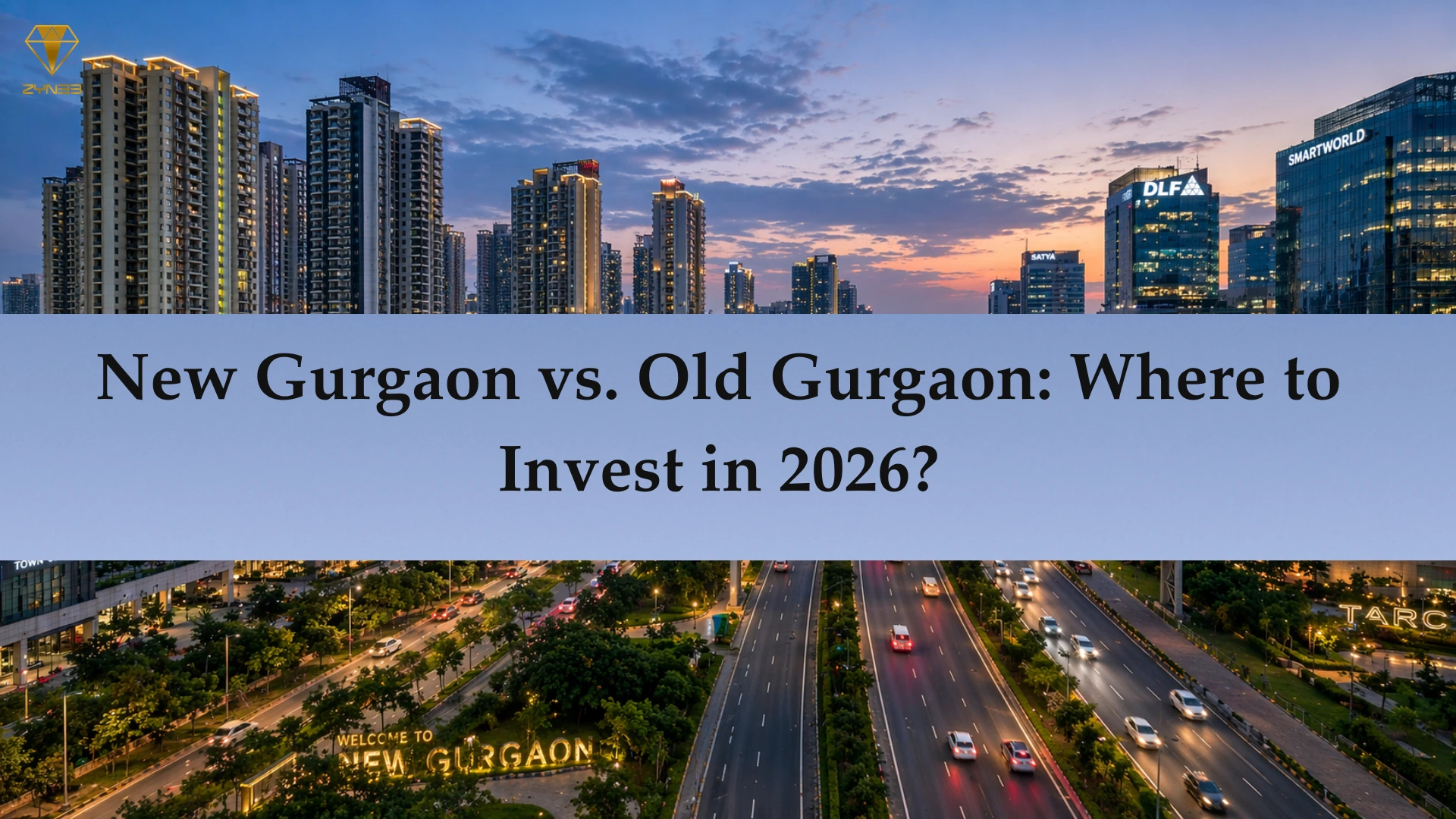
Holding Rs 75 lakh to Rs 1 crore? New Gurgaon or Sohna town, where the money reaches a usable size. At either you get around 2 percent gross, so buy for growth rather than income. The New Gurgaon property market read covers the format point there.
Holding Rs 1.5 crore and wanting the best income offset? Golf Course Extension at 3 to 4.7 percent, accepting a compact unit, and Golf Course Extension Road sector by sector shows which pockets move. Wanting the most space with delivered connectivity? The Dwarka Expressway entry price of about Rs 14,000 buys 1,071 sq ft at that budget on a finished corridor.
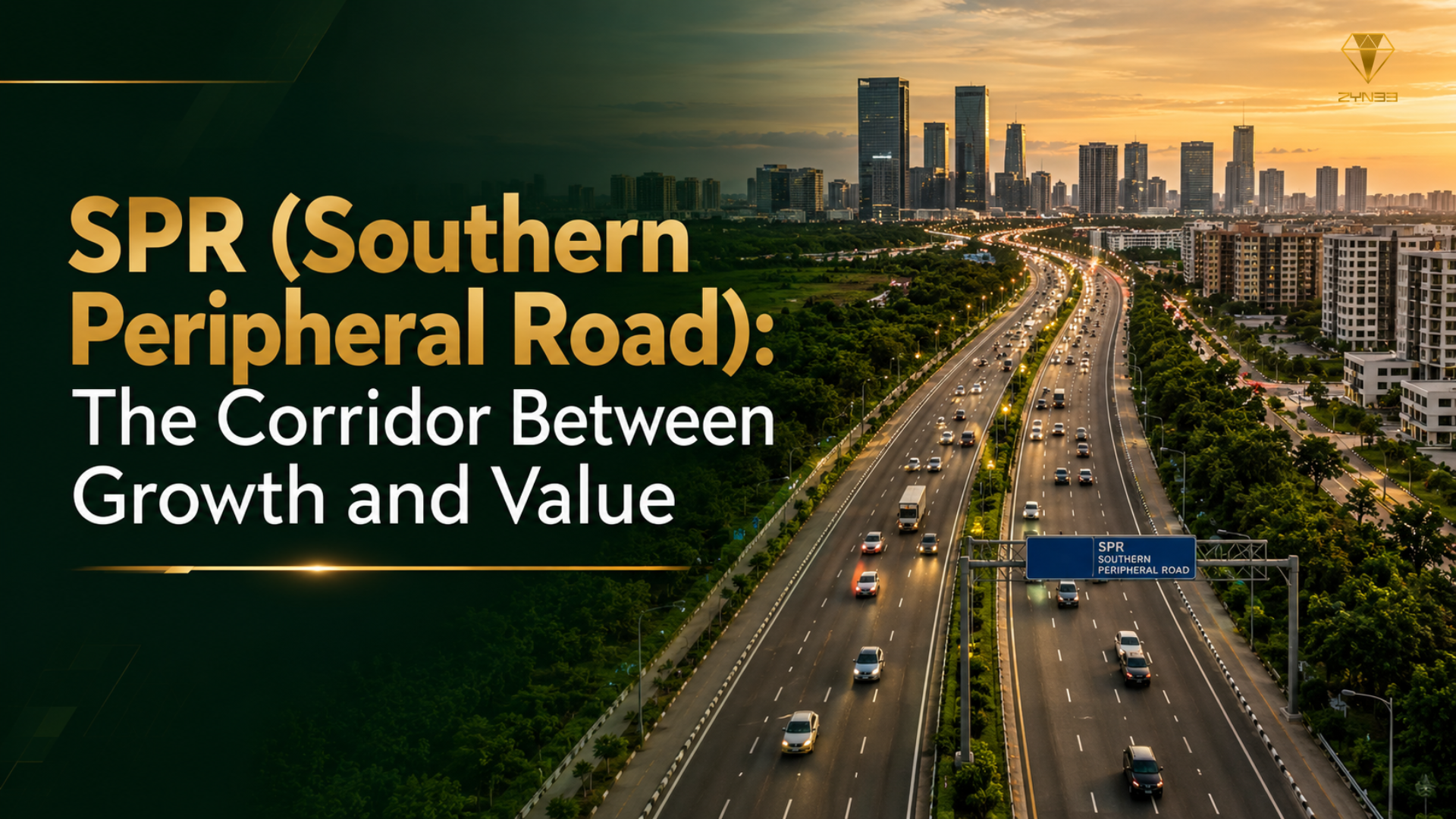
Considering SPR because it looks cheap for the location? Three of four sectors printed negative and it yields about 1 percent, which SPR investment explains. If this is not you, stop here.
About 8 percent above the price at registry, and first time buyers routinely budget the price and not the transaction.
|
Price |
Stamp duty at 7 percent |
All in at registry |
|
Rs 75 L |
Rs 5.2 L |
Rs 81.5 L |
|
Rs 1 Cr |
Rs 7.0 L |
Rs 108.5 L |
|
Rs 1.5 Cr |
Rs 10.5 L |
Rs 162.5 L |
|
Rs 2 Cr |
Rs 14.0 L |
Rs 216.5 L |
Duty inside municipal limits is 7 percent for a male buyer, 5 percent for a female buyer and 6 percent for joint registration. Registering in a woman's sole name saves Rs 3 lakh on a Rs 1.5 crore purchase, which is real money at this budget. Registration adds 1 percent capped at Rs 50,000, and brokerage typically another 1 percent.
Duty applies to the higher of your transaction value or the collector rate, so a discount you negotiate does not always reduce your bill.
Not on the sanctioned record, and this claim appears in most sector guides for the corridor.
The corridor approved by the Union Cabinet in June 2023 runs from Millennium City Centre to Cyber City at 28.5 km across 27 stations. It does not serve Golf Course Extension Road. A separate alignment from Sector 56 towards Pachgaon has had its detailed project report cleared at board level. It awaits sanction, which is different from being under construction.
On Dwarka Expressway the approved station is at Sector 101, on a 1.85 km spur to the Basai depot. So a Sector 92 to 95 purchase justified by metro proximity is relying on a station several sectors away. Any ISBT proposal for that pocket should be treated as unsanctioned until you can name the notification.
Six things, and none of them are about amenities. Start with the HARERA registration. Pull the number for the specific phase and verify it at haryanarera.gov.in. Gurugram and Panchkula are separate benches, and sites such as hrera.in and hrera.org.in are not the authority.
Second, read the filed completion date rather than the marketed one. Third, ask for the carpet area and recompute the rate on it. HARERA registers carpet while brochures quote super built up, and the gap runs 35 to 45 percent.
Fourth, check the twelve month print for your specific sector rather than the corridor. Fifth, check the promoter entity for insolvency proceedings on the public records. First time buyers almost never run that check, and it has caught buyers in this market. Sixth, confirm the collector rate for the sector against your agreed price.
One correction on what registration gives you. RERA is a registration and disclosure regime. It requires a promoter to register, file a completion date and report progress, and it gives you a remedy if that date is missed. It does not ensure transparency or protect your money by itself, and treating it as a guarantee is how buyers skip the checks above.
Anyone who needs the rent to service the loan. At 1 to 4.7 percent gross, before maintenance, vacancy and slab tax, no corridor here covers an EMI.
Anyone whose budget only reaches a premium corridor at studio size. The smallest unit in an expensive building is the hardest thing in the market to resell. Anyone with an exit horizon under five years, given about 8 percent in entry costs and 3 percent on exit. Anyone buying on a metro expectation that is not sanctioned. And anyone entering SPR at par while three of four sectors print negative.
At four different stages, and a first purchase is usually better placed in the middle two than at either end.
Golf Course Road is stabilised, closed to new supply and below its 2024 peak, which suits capital preservation rather than a first growth purchase. Golf Course Extension is late expansion with the widest internal spread in the city, from minus 3.3 to plus 20.3 percent across its sectors.
Dwarka Expressway has finished its infrastructure. The Haryana section opened in March 2024 and the Delhi section on 17 August 2025, so the fringe has already flattened. New Gurgaon and Sohna town are earliest, cheapest and carrying the deepest standing inventory, which caps how fast either can move.
With a carpet rate ceiling and a walk away number, both written down before you view anything.
Take the corridor asking average as your floor. Add only the premium you can defend on evidence you have seen. For a first purchase that means registered comparables in the same building, not a corridor story.
Then size the unit before you pick the address. A usable two bedroom needs roughly 700 to 900 sq ft carpet and a genuine three bedroom about 1,100. Work backwards from that to the corridor your budget reaches, rather than picking a corridor and accepting whatever size it leaves you.
Size compression is the first Risk and it is the one budget-constrained buyers walk into. Stretching to a premium corridor at a fixed budget leaves you with the smallest unit in the building. That is the last to sell and the first to discount.
Yield expectation is second. This market does not produce income at any price point. A plan needing rent to cover an EMI fails at every corridor in the table.
Third, unsanctioned infrastructure, where metro and ISBT claims outrun the notifications. Fourth, sector divergence. Prints inside one corridor run from minus 8.6 to plus 20.3 percent, so a corridor average tells you little about your asset.
Price based: measure against registered comparables in your own project, not a corridor average. Then net out duty already paid, exit costs and capital gains before calling anything a return.
Event based: on Dwarka Expressway there is no pending trigger, because the corridor is complete. In New Gurgaon it is Global City reaching visible completion. On Golf Course Extension it is your own sector's print turning, since the corridor moves unevenly.
Time based: hold beyond 24 months so gains are long term rather than taxed at slab, and plan five to seven years in practice. Below four years the transaction costs alone put you behind.
New Gurgaon or Sohna town below Rs 1 crore. Dwarka Expressway or Golf Course Extension above Rs 1.5 crore, and that choice turns on whether you want size or yield.
The useful framing for the best sectors for first time property investors is not a ranking. It is that yield and price are unrelated here. The same budget buys seven times more floor area in one corridor than another, and no corridor produces enough income to service a loan. Size the unit, check the registration, and let the sector follow from the budget rather than the other way round.
Making a first purchase between Rs 75 lakh and Rs 2 crore, with a decision due in 60 to 90 days? Send your budget and whether you are prioritising size, yield or growth. We return the corridors your budget reaches at a usable carpet area. The HARERA registration, filed possession date and twelve month sector print come with each shortlisted project.
Strata Capital Holdings tracks price band shifts, infrastructure timelines and inventory movement across Gurugram's corridors. ZYN33 brings that into every allocation conversation.
Deputy Commissioner Gurugram, public statement on the 2026-27 collector rates: effective 1 April 2026, average increase 15 to 30 percent, about 51 percent of the district unchanged, around 11 percent rising up to 75 percent
Haryana stamp duty on conveyance within municipal limits: 7 percent male, 5 percent female, 6 percent joint, with registration at 1 percent capped at Rs 50,000
Area conversions, all in costs and budget mappings are ZYN33 calculations on the rates stated in the body
Disclaimer
This article is general information about tax and property mechanics in India. It is not tax advice, investment advice or a recommendation to buy a specific property, and it does not account for your personal circumstances. Rates, thresholds and deadlines change. Verify every figure against the source listed above and take your liquidation plan to a qualified chartered accountant before you sell anything. ZYN33 distributes residential projects in Gurugram and is paid a transaction fee when a purchase completes. We do not act as your tax adviser or your adviser on the equity side.
Tell us your budget and timeline.
Tell us your budget and timeline.